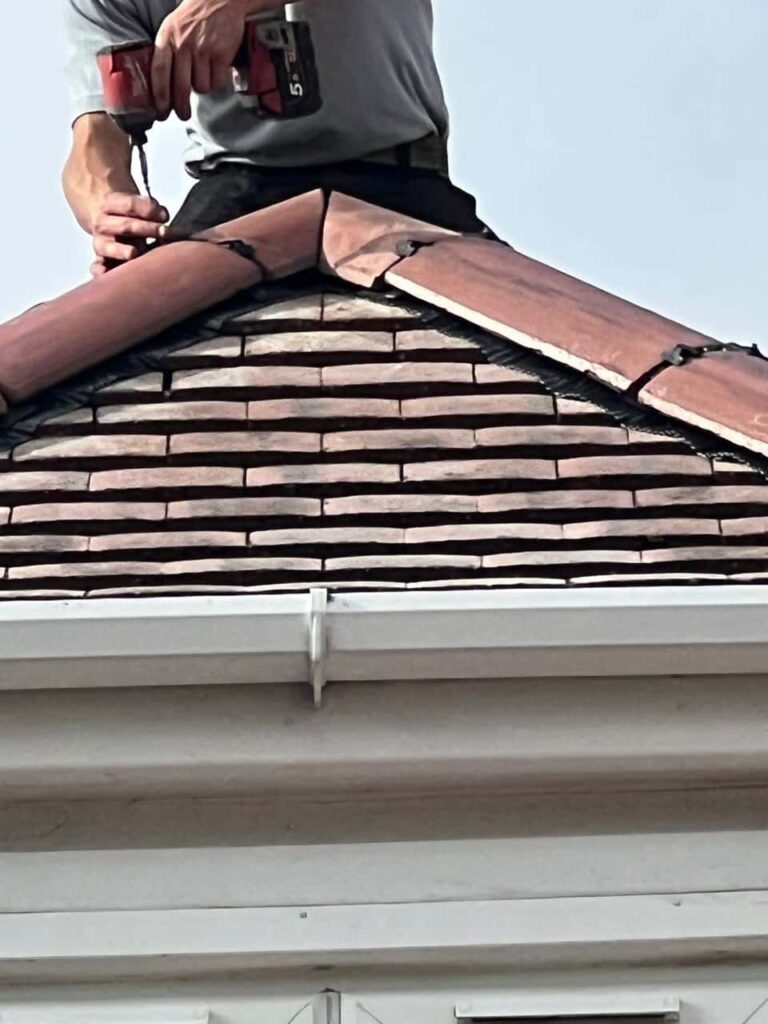
An older roof does not necessarily need replacing simply because of its age. If the covering and supporting materials remain sound, appropriate maintenance and localised repairs may keep it performing reliably. Replacement becomes more relevant when deterioration is widespread or new defects continue to appear.
For property owners in Cottenham, Cambridgeshire, a professional assessment can establish whether replacement would offer meaningful practical benefits. The decision should be based on the condition of the complete roofing system rather than appearance alone.
How Replacing an Outdated Roof Can Improve Your Property
When replacement is genuinely required, it provides an opportunity to address the visible covering and the concealed components beneath it. The following advantages explain why this comprehensive approach can be more effective than repeatedly treating separate faults.
1. More Consistent Protection From the Weather
A deteriorated roof may contain cracked tiles, weakened fixings, worn junctions and areas repaired at different times. Even if each defect appears small, their combined effect can make the covering less dependable.
Replacement creates a continuous roofing system with correctly aligned materials, suitable overlaps and consistent fixings. This helps the roof manage rainfall and wind exposure more effectively across every slope.
2. Recurring Leaks Can Be Addressed Together
Repeated leaks do not always come from the same opening. Water may enter through several weak points and travel along underlay or roof timbers before becoming visible indoors.
Removing the old covering allows multiple entry points to be investigated and corrected as part of one project. Valleys, flashing, ridges and other vulnerable details can be integrated with the new roof rather than repaired separately.
3. Concealed Deterioration Becomes Accessible
Underlay, battens, decking and supporting timbers are largely hidden during the normal life of a roof. Problems may therefore remain undetected until the covering is lifted.
Roof replacement exposes these areas for inspection. Deteriorated or damaged components can be identified and addressed before the new materials are installed, preventing known weaknesses from being sealed beneath the finished roof.
4. New Underlay and Battens Create a Reliable Foundation
An outdated roof covering may sit over brittle underlay or timber battens that have been affected by age and moisture. Replacing tiles alone would not correct these underlying problems.
During re-roofing, suitable underlay can provide continuous secondary protection, while correctly positioned battens support and secure the new tiles. This gives the visible covering a dependable foundation.
5. Vulnerable Junctions Can Be Improved
Chimneys, adjoining walls, valleys, verges and roof penetrations are common locations for water ingress. Older flashing and weathering details may have become cracked, loose or incompatible with previous repairs.
A replacement roof allows these junctions to be formed alongside the new covering. Treating them as part of the complete installation helps create a more coherent system than connecting another patch to ageing materials.
6. Ventilation and Moisture Management Can Be Reviewed
Some older roofs experience condensation or persistent moisture within the roof space. These issues should be diagnosed carefully, as they are not always caused by a leaking covering.
Replacement provides an opportunity to review how air moves through the roof and whether the existing arrangement manages moisture effectively. Any improvements must be appropriate to the roof design so that different components continue to work together correctly.
7. The Roof Gains a More Unified Appearance
Numerous repairs, mismatched tiles and weathered sections can leave a roof looking uneven. This may be especially noticeable when replacement materials installed over several years have faded differently.
A new roof creates a consistent finish across the complete area. Materials can be selected to complement the property, while ridge lines, edges and junctions can be finished as part of one planned installation.
8. Future Maintenance Becomes More Straightforward
An outdated roof containing many repairs can be difficult to inspect because each section may have a different history and condition. New defects can also develop around the boundaries of older patches.
A replacement roof provides a clear starting point for future maintenance. Its components have been installed together, making routine inspections easier to understand and helping isolated issues stand out before they spread.
When Is Replacement More Appropriate Than Repair?
Replacement may be worth considering when:
- leaks occur in several unrelated areas
- tiles or slates are failing across multiple slopes
- previous repairs repeatedly deteriorate
- underlay and battens are extensively damaged
- flashing and roof junctions have widespread defects
- the roof contains numerous inconsistent patches
- moisture has affected concealed materials
- ordinary maintenance no longer delivers reliable results
A single missing tile or localised flashing defect does not normally justify replacing an otherwise sound roof. The pattern and extent of deterioration are more important than the roof’s age alone.
What Should a Professional Assessment Include?
Before recommending replacement, a roofing contractor should examine the covering, ridges, valleys, flashing, verges and accessible roof space. The condition of underlay, battens and supporting timber should also be considered wherever they can be inspected.
This assessment helps distinguish between a roof that needs targeted repairs and one that would benefit from comprehensive renewal. It also ensures that the proposed work addresses the causes of deterioration rather than only its visible symptoms.
Conclusion
Replacing an outdated roof can provide more consistent weather protection, resolve recurring leaks and allow concealed deterioration to be addressed. It can also renew underlay, battens and vulnerable junctions while creating a unified appearance and clearer basis for future maintenance.
These advantages matter only when replacement is supported by the roof’s actual condition. If you are concerned about an ageing roof in Cottenham, Cambridgeshire, Cottenham Roofing Repairs can carry out a professional assessment and explain whether repair or replacement is the more appropriate solution. Contact the team to arrange an inspection.
Call us on: 01954 776 176
Click here to find out more about Cottenham Roofing Repairs
Click here to complete our contact form and see how we can help with your roofing needs.